This move has prompted us to radically scale back belongings. Though, for months and years we've been disparaged over our "things". We know they have begun to rule us. Enjoyment is halted, walking is hindered, spaces become confined, money seeps away with the need for "things". Where does the need to have come from? When are we conditioned to need so much?
I surely don't remember being taught consumerism. I suppose, though, that was the point.
Giving up and letting go, thirty years into my life, is scary. I think to myself somewhat silly though valid questions and thoughts.
"What if I need this and can't afford to get another?"
"How will I do things without the proper tools?"
"I spent money on this. Just to give it away seems foolish."
"What if something happens and I don't have what I need?"
"How can I effectively teach our kids with a smaller library of resources?"
Then changing lifestyles comes with it's own need for things. The tools for new trades, new work and self-sufficiency require things that have been needless in our past lives. I find myself buying galvanized tubs, portable water containers and searching for a low priced clothes wringer. Things I have never had use for until now. Unless I give way to the simplification of our other household items, fitting these new utilitarian necessities into our shrinking home is impossible.
Though some things are being switched out for more useful, longer lasting, multipurpose items, the release of things we've grown dependant -but don't need- is still overwhelming and scary. And I will admit there are things I don't want to give up. Things I'm not ready to let go. Each day, week, month brings me closer to finding closure. To understand that giving up doesn't mean having less. Each step towards simplicity brings me a step closer to the things I truly want in life. Even if at first it seems frightening.

Showing posts with label voluntary simplicity. Show all posts
Showing posts with label voluntary simplicity. Show all posts
Monday, September 13, 2010

Tuesday, August 10, 2010
It may seem strange

Can you picture me on the back porch hand scrubbing cloth napkins while listening to music from my iPhone? Getting a call while stringing up unmentionables on the laundry line? It does seem odd.
But it's all about finding a balance. Embracing technology while revitalizing the antique. But why am I looking up hand washing implements? Because I'm sick of my HE fantastically expensive beautiful blue gray washing machine tearing. up. my. clothes. It really and truly ruins them. Shredding bra and sundress straps. Eating holes- holes- in pillows, ripping jammies and tearing apart cloth diapers and then having the audacity to not even get them clean. They come out caked with grime needing to be rewashed. What is the point of having it? It's costing more money and trouble than I care to handle right now. The dryer is practically out of the picture already and they are a matched set.
Yes, the tubes have been cleaned out. Yes, I bought the expensive "HE machine washer soap" to wash the inside of the machine because it smelled. An entire wash cycle just to wash the machine. Eghads.
Washing machines have been in production for a couple hundred years. Different modes of agitation, soap concoctions and rinsing methods have evolved astronomically over the past oh, hundred years or so. Do I want to hunch over a tub of murky wash water pounding out stains? Not particularly. I mean the majority of clothes come away from the wash unscathed but its the ones that don't make a clean getaway that get me riled up.
I think of the piles of clothes that accumulate in a week and just know bone deep we have too much. There is too much waste. It's too easy to let those ruined garments go because there is just so much still in drawers, stacked in clean laundry piles or waiting to be washed. The kids don't give more than a passing glance when they soil a shirt or drip on their pants.
They don't see it. They don't clean it. It goes in a machine and magically gets back to their rooms ready to wear. They have become divorced from the reality of clothes care. So, perhaps we scale back the clothes. Perhaps, we invest in a wash tub and wringer. Maybe the kids lend a scubbing hand and see just what it takes to get their clothes clean.
I'm still unsure, this might be one of those idyllic things that reality just isn't cut out for. Though, I'd like to have the tools on hand incase we loose power, something breaks or we head to the land for any amount of time. I'd like to hear others opinions on shifting to manual washings (especially with so many people!). Do you have a washer? Dryer? Would you rather not?
Sunday, July 25, 2010
Voluntary Simplicity - Work Smarter
As a side note, today is much better. I passed my test yesterday and the remaining three bunnies look healthy and good. I have to remember to stay in the moment. Not dwell on things that are yet to be, tackle each thing as it comes. Take steps forward but not engross myself so much in getting ahead that I forget where I'm standing. Thanks to all that gave your support. It was (and is, as I re-read the posts) so very much appreciated.
The girls and I are reading more of Little House on the Prairie 75th Anniversary Edition *. The life portrayed is so very close to what I want to offer to my family in some respects and it has has given me insight to how things got done before electricity and running water.
It's given me much to ponder. For instance, Pa got the bucket of water from the creek. Ma gathered up all the sheets and clothes and washed them in the water, rinsing them in a second tub. She laid them out to dry on the grass The water got drained out into the field, hydrating the land. There wasn't mounds of laundry to be done. There wasn't enormous amounts of water being used. Ma didn't spend time every single day pulling the loads of laundry through the line. Why is this?
I reason it's because they didn't have more clothes than they knew what to do with. Clothes serve a purpose, a function. They're not merely things to hang in closets, left to crumple in drawers, taking up space, sometimes never worn before they're grown out of. I speculate too, that the kids took better care of their clothes because of this reason. They knew they couldn't afford to waste what they had on. That they'd probably have to wear that outfit or those pajamas again before they got cleaned.
Then we read about Ma and her after supper routine. The family of five had four tin plates, four tin forks, four tin cups while they were out camping on the prairie. After they were used they were promptly washed. Ma didn't have piles of cups and plates and bowls stacked in the sink waiting to be washed. There was no dishwasher running excessively like it is in my house. She didn't waste money on detergent and heat drying her dishes. Why is that?
Again, here I ponder the simplicity of living with only what you need. How hated chores and overwhelming tasks break down to small, easily accomplished goals. But we must find a balance. I realize that getting rid of too much can actually make life harder. Though, knowing how things used to be puts a new glint in my gaze. I look at our posessions in a new light.
What is needed? What makes us happy?
For each person the answers will differ. For our life on the farm, we want to work smarter not harder. Less clothes = less laundry, less storage and less mess. Less dishes means the kids have to be concious of the items they dirty, less work in cleaning and less resouces wasted. I want less work in these areas to free up time to do things that make me happy. To ease the burden of housework that yolks me.
I've pared down the books and feel good about the ones that remain. This week I'm going to be looking at our clothes and eating utensils to see where I can make a difference there as I work -hopfully smartly- towards a simpler life.
What burdens do you have that discourage you? Is there a place in your life you can par down to lighten your heart?
*The link I provided is an associate link to Amazon.com. Purchases made through this link help support our family.
The girls and I are reading more of Little House on the Prairie 75th Anniversary Edition
*. The life portrayed is so very close to what I want to offer to my family in some respects and it has has given me insight to how things got done before electricity and running water. It's given me much to ponder. For instance, Pa got the bucket of water from the creek. Ma gathered up all the sheets and clothes and washed them in the water, rinsing them in a second tub. She laid them out to dry on the grass The water got drained out into the field, hydrating the land. There wasn't mounds of laundry to be done. There wasn't enormous amounts of water being used. Ma didn't spend time every single day pulling the loads of laundry through the line. Why is this?
I reason it's because they didn't have more clothes than they knew what to do with. Clothes serve a purpose, a function. They're not merely things to hang in closets, left to crumple in drawers, taking up space, sometimes never worn before they're grown out of. I speculate too, that the kids took better care of their clothes because of this reason. They knew they couldn't afford to waste what they had on. That they'd probably have to wear that outfit or those pajamas again before they got cleaned.
Then we read about Ma and her after supper routine. The family of five had four tin plates, four tin forks, four tin cups while they were out camping on the prairie. After they were used they were promptly washed. Ma didn't have piles of cups and plates and bowls stacked in the sink waiting to be washed. There was no dishwasher running excessively like it is in my house. She didn't waste money on detergent and heat drying her dishes. Why is that?
Again, here I ponder the simplicity of living with only what you need. How hated chores and overwhelming tasks break down to small, easily accomplished goals. But we must find a balance. I realize that getting rid of too much can actually make life harder. Though, knowing how things used to be puts a new glint in my gaze. I look at our posessions in a new light.
What is needed? What makes us happy?
For each person the answers will differ. For our life on the farm, we want to work smarter not harder. Less clothes = less laundry, less storage and less mess. Less dishes means the kids have to be concious of the items they dirty, less work in cleaning and less resouces wasted. I want less work in these areas to free up time to do things that make me happy. To ease the burden of housework that yolks me.
I've pared down the books and feel good about the ones that remain. This week I'm going to be looking at our clothes and eating utensils to see where I can make a difference there as I work -hopfully smartly- towards a simpler life.
What burdens do you have that discourage you? Is there a place in your life you can par down to lighten your heart?
*The link I provided is an associate link to Amazon.com. Purchases made through this link help support our family.
Sunday, July 18, 2010
Maintenance Manual

I pulled out Nourishing Traditions: The Cookbook that Challenges Politically Correct Nutrition and the Diet Dictocrats this morning, determined to pick up where I left off -on page 27. When I originally purchased it, way back in April, I was drawn to the methods and sense that this cookbook presents. But things got in the way, as they often do, and the book has been sitting on a shelf in the kitchen since that fateful day I arrived on page 27.
 That page holds no real signficance. It's just, by that point in the book, I had just gotten overwhelmed with the sheer force of information. With my dawning realization that I might not be living up to the high standard I set in regards to our maintenance needs, today, I picked it up again. This time armed with a highlighter to help me pull out the important bits. I finished the begining of the book up until the recipes start.
One thing I love about this guide and cookbook is that there isn't a vast, overwhelming change in our diets by implementing it. It's not totally what we eat but how we prepare it; the ingredients we use; the method of deployment. For others, that might not be true.
Eating a Nourishing Traditions Diet requires preplanning and forethought. I have done this before, making lists of what we'll eat and when, but the difference here is that if you want pizza on Friday, you'd better start the dough Thursday. Want Ruben Sandwhiches? You need to plan at least 3 days prior.
This is a good thing. It's a way to make sure that when Friday rolls around I'm not standing with the fridge door open ho-humming about what we're going to have. The dough will be waiting for me. It also means my head needs to stay in the present. Not to say there aren't quick meals in the book too, but a lot of the main recipes call for some ingredient that requires fermenting.
It will be a challenge, I think, learning how and what and when to make things. But the health benefits to my family, the slow-down pace of planning will help level the balance on my maintenance/surpassing scale.
Friday, July 16, 2010
"Only not dying."
The past few days I've been busy filling the hours with housework, chores and errands. Trying to make the most of my week with only two kids about. A good bit of the time I succeeded but there was a fair amount of failure when I just goofed off. Life can't all be work, now.
During my lolligagging, I was able to read a few more pages in the Voluntary Simplicity: Toward a Way of Life That Is Outwardly Simple, Inwardly Rich book. With my epiphany during the first forty pages, I cleared out at least 1,348.765 pounds of books and some clothes that are now lining the shelves of the battered woman's shelter. That was a good move and already story time is easier, feels less overwhelming. Giving to those who need it eases my heart of the burden. The cleaning also brought about my finding The Little House on the Prarie story time hardcover. The two oldest girls listened to me read the first two chapters tonight. I missed those camp-goers terribly. It was a good way to reconnect.
With the reading of the next four pages of Voluntary Simplicity I find myself at mental red light. Here, the author delves into a section called "Maintaining Ourselves and Surpassing Ourselves" again, another point of balance. (Which is what everything seems to hinge on). Maintaining our bodies while our minds seek to surpass what and where we are now. Mere maintenance allows only for our bodies to not die. Living isn't truly accomplished. Yet, focusing entirely on providing ourselves with a meaningful, soulful, existence our basic needs won't be met and we will die. The balance of both is crucial.
My mind is pondering this. I can feel the thoughts rolling over and tumbling around in the grey folds of my brain. To shun everything and merely exist won't work. This is what the author has said from the begining. Letting go of material wealth, turning off the power, sacrificing the things that make us happy or lively will not help us to move toward, well, for lack of a better word, enlightenment. For a long time I've thought that the only way to make the move to simplistic living was to get down to brass tacks, live a barren life. The key is to find a balance between technology and rustic living.
Have I been doing this? Have I been neglecting the maintenance to focus on the surpassing? Engrossing myself in classes, lessons, books and websites hoping to learn from text what I cannot learn by doing?
Then today I came across a quote on my Zen-a-day calendar.
As you walk and eat and travel, be where you are. Otherwise you will miss most of your life. - Buddha
Has this been the way I've been handling life? Constantly looking forward to "the next thing". The next course, the next article, the next blog post or workshop letting the experiences of the day pass me by while I wait? Holding an idyllic scene in my mind of what life will be like when we finally get on our land? Thinking that today isn't as good as it is because my dreams haven't been realized?
I think I might have been. I think that scares me.
So, today I look at what today is. What can it be, what time can I spend forging memories in my children's hearts while still working towards the goals that are written across my own. I will stumble. It's the way of me, but I'm hoping as I continue reading this particular book that life starts to balance out a little more. And by only not dying, I'm hoping I really get to live.
During my lolligagging, I was able to read a few more pages in the Voluntary Simplicity: Toward a Way of Life That Is Outwardly Simple, Inwardly Rich
book. With my epiphany during the first forty pages, I cleared out at least 1,348.765 pounds of books and some clothes that are now lining the shelves of the battered woman's shelter. That was a good move and already story time is easier, feels less overwhelming. Giving to those who need it eases my heart of the burden. The cleaning also brought about my finding The Little House on the Prarie story time hardcover. The two oldest girls listened to me read the first two chapters tonight. I missed those camp-goers terribly. It was a good way to reconnect. With the reading of the next four pages of Voluntary Simplicity I find myself at mental red light. Here, the author delves into a section called "Maintaining Ourselves and Surpassing Ourselves" again, another point of balance. (Which is what everything seems to hinge on). Maintaining our bodies while our minds seek to surpass what and where we are now. Mere maintenance allows only for our bodies to not die. Living isn't truly accomplished. Yet, focusing entirely on providing ourselves with a meaningful, soulful, existence our basic needs won't be met and we will die. The balance of both is crucial.
My mind is pondering this. I can feel the thoughts rolling over and tumbling around in the grey folds of my brain. To shun everything and merely exist won't work. This is what the author has said from the begining. Letting go of material wealth, turning off the power, sacrificing the things that make us happy or lively will not help us to move toward, well, for lack of a better word, enlightenment. For a long time I've thought that the only way to make the move to simplistic living was to get down to brass tacks, live a barren life. The key is to find a balance between technology and rustic living.
Have I been doing this? Have I been neglecting the maintenance to focus on the surpassing? Engrossing myself in classes, lessons, books and websites hoping to learn from text what I cannot learn by doing?
Then today I came across a quote on my Zen-a-day calendar.
As you walk and eat and travel, be where you are. Otherwise you will miss most of your life. - Buddha
Has this been the way I've been handling life? Constantly looking forward to "the next thing". The next course, the next article, the next blog post or workshop letting the experiences of the day pass me by while I wait? Holding an idyllic scene in my mind of what life will be like when we finally get on our land? Thinking that today isn't as good as it is because my dreams haven't been realized?
I think I might have been. I think that scares me.
So, today I look at what today is. What can it be, what time can I spend forging memories in my children's hearts while still working towards the goals that are written across my own. I will stumble. It's the way of me, but I'm hoping as I continue reading this particular book that life starts to balance out a little more. And by only not dying, I'm hoping I really get to live.
Monday, July 12, 2010
Voluntary Simplicity - Books
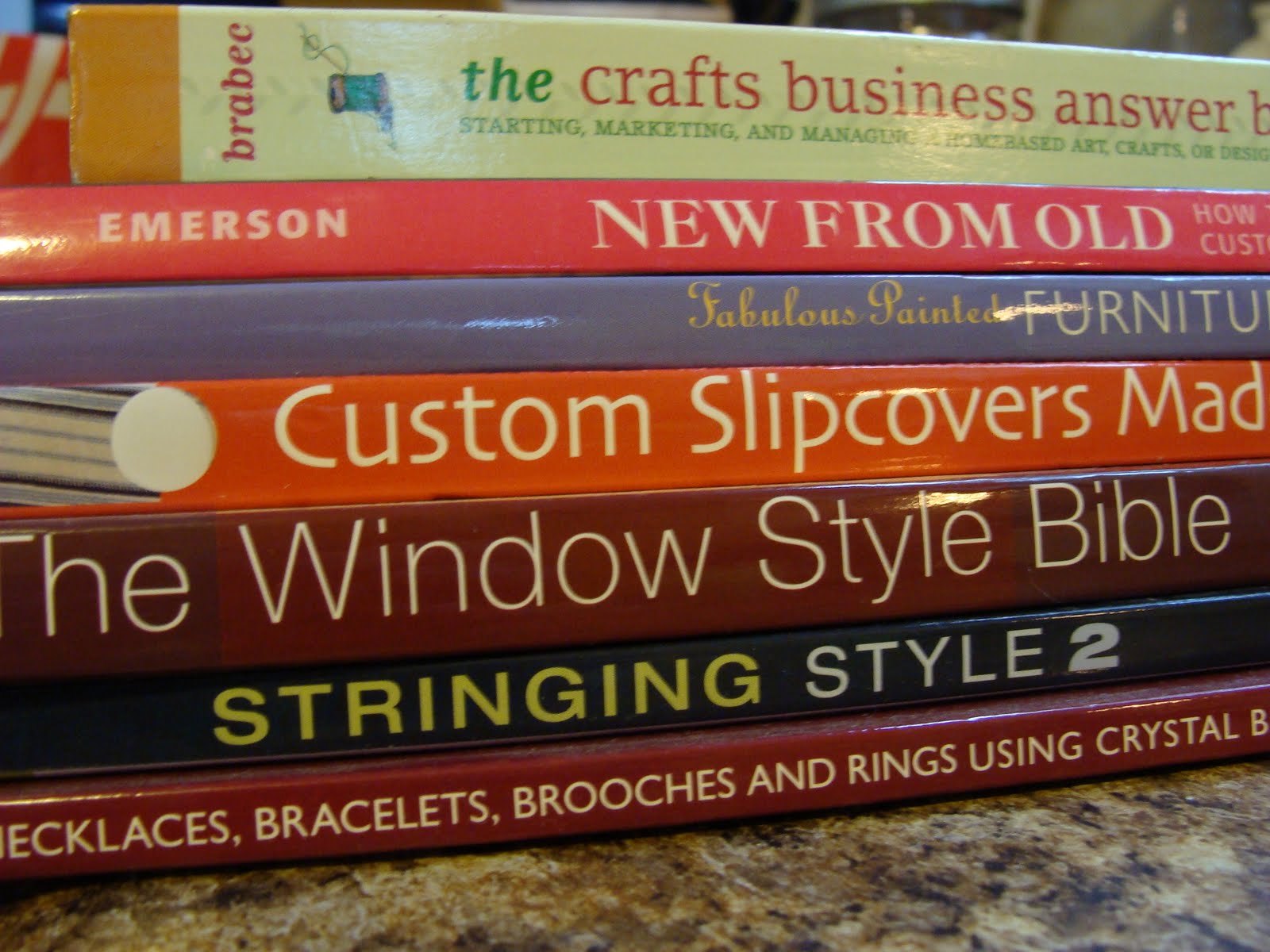
Yesterday, I started reading a book called Voluntary Simplicity: Toward a Way of Life That Is Outwardly Simple, Inwardly Rich
. I picked it up at the thrift store a few days ago. It looked like something I needed to read. For all my wishy-washy posts about paring down and simplifying and being completely bewildered at where to start and how much was too much, I wish someone would have recommended this book to me. So, for all of you that are as confuddled as I have been, start reading this book.
I'm only about forty pages in but so far the gist of the book is not to simplify so much that you lack, but to remove the things from your home that hinder your ability to enjoy everything else. It's not about the amount of things but what those things mean to you. How they enhance your life and help you along your inward journey. You may have many things or very few. Neither is wrong or right, it's a personal balance we must look inside our hearts to achieve.
There is one part of our home that we are overrun with; Books. I love books, to get rid of a book is like sacrilege to me. I love the brightly colored covers, the surprise endings, the myriad of places you can visit snuggled in your own bed. I love the thoughts and ideas that igneight my brain when I'm fully engrossed in a story. I love every single thing about books. Except...
We are overrun with books. The kids have three books shelves stacked so high they can't find the ones they want. Two nearly reach the ceiling. They become hard to put away neatly, get bent and torn because they can't be cleaned up easily. Good books get shoved into the background behind fluffy television-character featured books. We have a full bookcase downstairs, plus magazine racks in assorted places and another two shelves that line the top of one wall. Some books are very, very good. Others are senseless stories that hold no value save for relative entertainment. And that's not including any of our homeschool books, which take up another floor to ceiling shelving unit in the once-diningroom-turned-homeschool room.
Today, I start the task of simplifying our books. As much as it pains me to part with them, there are just too many to fully enjoy the good ones. The start will be easy, ridding ourselves of the books that hold little value to make room for the classics and dearly loved. These books will be packed up and donated to either the library or the woman's shelter down the road.
I can take comfort that they will have a good home and get loved by other children while my life becomes a little easier at story time. I look forward to sharing with you our efforts for voluntary simplicity and hope you check out the book I mentioned above, even if you too, have too many books.
Subscribe to:
Posts (Atom)